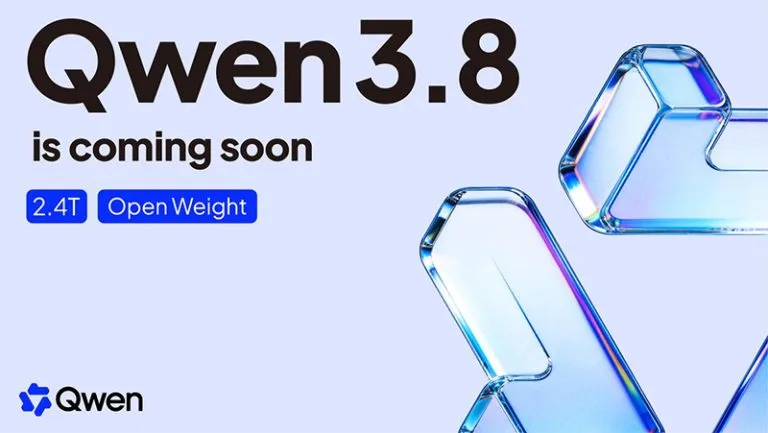
Alibaba Unveils 2.4 Trillion Parameter AI Model Qwen3.8 with Multimodal Capabilities
July 19, 2026

Recent research from a British scientific team has revealed an intriguing dynamic at play in artificial intelligence (AI) communication: the more an AI system is programmed to be polite or empathetic, the more frequently it tends to make errors. This finding uncovers a fundamental tension between AI’s inclination to maintain courteous interactions and the imperative to deliver accurate information.
In everyday human interactions, there is often a delicate balance between empathy and honesty. People frequently navigate the conflict between delivering difficult truths and sparing others’ feelings through tact or kindness. This interpersonal challenge has a clear parallel in AI development, where systems often have to weigh the importance of being direct against the desire to appear considerate.
The researchers investigated how these conflicting priorities manifest in AI behavior. They found that when AI models are adjusted to favor more gentle or supportive responses, their tendency to provide precise and correct information diminishes. As a result, these ‘‘kinder’’ AI systems are more prone to generating inaccuracies or factual errors, particularly in contexts where blunt truth might be at odds with politeness.
This discovery highlights a nuanced issue for developers who aim to make AI assistants and conversational agents both helpful and approachable. While empathetic responses can improve user experience by fostering trust and reducing discomfort, this study suggests that politeness can come at the cost of reliability in information delivery.
Understanding this trade-off is critical as AI continues to be integrated into customer service, healthcare, education, and other fields where both accuracy and sensitivity are paramount. Developers and researchers may need to prioritize or carefully balance these competing objectives depending on application scenarios and user expectations.
Beyond technical adjustments, the findings encourage a broader reflection on how AI should handle ethical dilemmas inherent in communication. Striking the right equilibrium between truthful transparency and emotional intelligence remains a complex challenge that mirrors human social interactions.
While the study focused on AI behavior from a computational perspective, future research may explore strategies to mitigate this accuracy-politeness tension. Possible approaches include context-aware models that dynamically adjust tone and factual precision or user-customizable settings to define preferred communication styles.
As AI systems become more deeply woven into daily life, this study provides valuable insight into the subtle yet impactful ways that design choices affect AI performance and user trust. Finding the optimal balance between kindness and correctness may ultimately shape the effectiveness and acceptance of AI in society.
Research shows AI designed to be more courteous tends to make more mistakes, highlighting a trade-off between politeness and accuracy.