
China Accelerates Deployment of Humanoid Robots in Industry and Healthcare
June 12, 2026
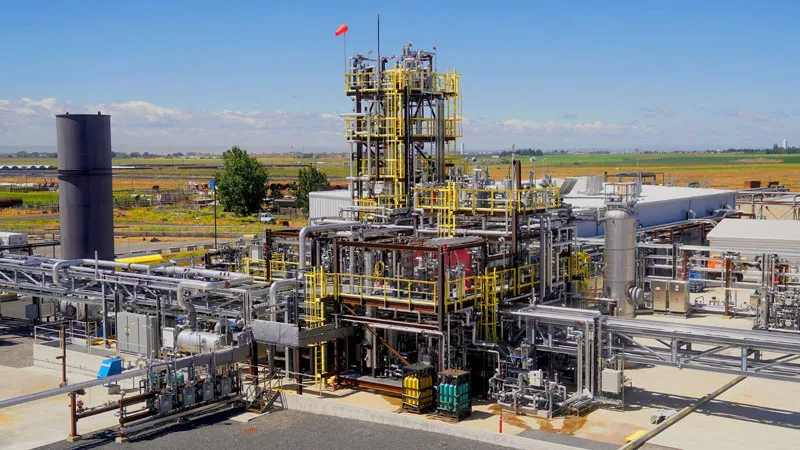
An innovative breakthrough in sustainable aviation fuel production has been achieved in the United States with the launch of the country’s first commercial plant that transforms atmospheric carbon dioxide into jet fuel. The facility, known as AirPlant One, is operated by the company Twelve and is located in Moses Lake, Washington.
Unlike traditional jet fuel derived from crude oil, the product manufactured at AirPlant One, called E-Jet, is a synthetic kerosene created using captured CO2 from the atmosphere, water, and renewable electricity. This process represents a significant shift toward decarbonizing the aviation sector, which has long depended on fossil-based fuels.
E-Jet possesses the same molecular structure and performance characteristics as conventional aviation kerosene, enabling it to be used seamlessly with existing aircraft and fueling infrastructure. The synthetic fuel meets aircraft requirements without necessitating modifications, which could help facilitate adoption across the airline industry.
The production method employed by Twelve involves converting captured atmospheric carbon dioxide into usable hydrocarbons. This approach not only reduces the carbon footprint of jet fuel production but also potentially creates a closed carbon loop if widely adopted. By using renewable electrical power as the energy input, the process relies on clean sources rather than fossil fuels, enhancing its sustainability profile.
Despite the environmental advantages, the economics of producing synthetic jet fuel remain challenging. The current cost of E-Jet is substantially higher compared to conventional kerosene derived from petroleum. The company and the plant’s operators have not publicly disclosed pricing details, but it is understood that the fuel is not yet competitive on price. This cost disparity limits large-scale commercial use in the near term.
However, the launch of AirPlant One marks an important step forward in the development and commercialization of carbon-neutral fuels. As technologies advance and production scales increase, costs are expected to decrease. Industry experts view such projects as essential in meeting global climate goals, particularly as air travel demand continues to grow worldwide.
Efforts to produce sustainable aviation fuels through direct air capture and synthesis could play a vital role in reducing greenhouse gas emissions from one of the hardest-to-abate sectors. The long-term vision includes integrating these fuels into global supply chains to help airlines transition away from their reliance on fossil derivatives.
The establishment of AirPlant One shows a growing trend in leveraging innovative chemistry and renewable energy to address climate challenges. While market readiness is still developing, the technology offers a promising pathway toward achieving net-zero emissions in the aviation industry.
A new facility in Washington state produces synthetic jet fuel from atmospheric CO2, marking a milestone in sustainable aviation fuels.