Memory Chip Makers Face Potential DRAM Oversupply by 2028 Amid Massive Capacity Expansions
July 20, 2026
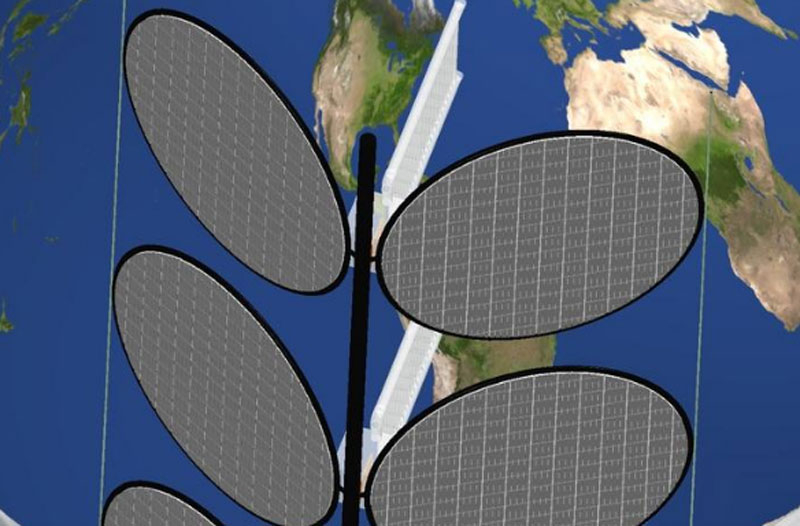
US researchers have revitalized a concept originally explored in the 1960s to design passive space structures stabilized by gravitational and centrifugal forces, now proposed as a real-world project for orbital data centers. This initiative marks a significant shift towards deploying cloud infrastructure in space, attracting the attention of investors and hyperscale operators for its practical potential.
The foundational idea involves a tensioned tether system with masses anchored at each end, a configuration known for its natural balance of forces in orbit. Researchers have extended this principle to develop a design framework for data centers that would operate in a low Earth orbit environment. Unlike previous speculative projects, this approach prioritizes engineering feasibility, aiming for a deployable architecture that can maintain stability without heavy mechanical systems.
Current interest from technology investors and large-scale cloud providers highlights the commercial and operational advantages such orbital data centers could deliver. Benefits include reduced latency for global users and increased energy efficiency by leveraging space’s unique conditions. These data centers would potentially relieve terrestrial infrastructure constraints and open new frontiers in data management and computing capacity from orbit.
While the concept itself dates back over fifty years, recent advancements in materials science, miniaturization, and orbital deployment technology bolster the project’s practicality. The renewed focus on such orbit-based data centers fits within a broader trend of innovation in cloud architectures and digital infrastructure expansion aimed at meeting increasing data demands worldwide.
The development of space-based data centers aligns with a growing market interest in distributed computing infrastructure and edge data centers. Competitors in the cloud sector are exploring various approaches to enhance data processing capabilities beyond terrestrial limits, including satellite networks and lunar installations. Innovations addressing orbital deployment challenges are an emerging niche in the semiconductor and cloud infrastructure markets, reflecting broader shifts toward next-generation computing platforms.
Looking ahead, the project’s progress will be closely followed for milestones related to prototype testing, orbital deployment, and partnerships with hyperscale cloud companies. Further technical details and implementation timelines will likely unfold as the initiative moves from conceptual design towards operational validation.
US scientists revisit a half-century-old concept to develop a viable space-based data center stabilized by gravitational and centrifugal forces.