Intel Initiates New Round of Layoffs in Data Center Group Amid Efficiency Drive
July 21, 2026
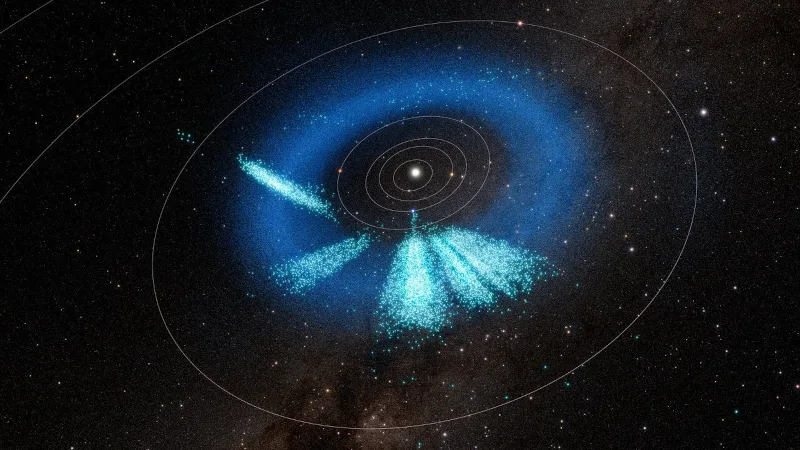
The Vera C. Rubin Observatory has made a significant impact in its initial observation period by discovering over 11,000 previously unknown asteroids. This achievement marks an important advancement in the ongoing effort to expand and refine the catalog of small bodies orbiting the Sun.
Located in Chile, the Vera C. Rubin Observatory is designed to conduct a comprehensive survey of the night sky. Despite being in the early stages of operation, the facility has demonstrated the capability to rapidly identify thousands of moving objects within just a few days. This capability accelerates the pace at which these small bodies—ranging from asteroids to other minor solar system objects—are cataloged.
Alongside discovering new asteroids, the observatory has also refined the orbital data for tens of thousands of known small solar system bodies. This improved tracking enhances the precision of their predicted paths, which is vital for understanding potential impacts and close approaches to Earth.
A key component of this research is the identification and monitoring of near-Earth objects (NEOs), which are especially significant for planetary defense efforts. Updating the catalog with new objects and better orbital information supports early warning systems capable of mitigating potential asteroid threats.
The Vera C. Rubin Observatory’s rapid survey ability stems from its wide-field imaging technology, which allows it to cover extensive portions of the sky in a short timeframe. This efficiency enables the observatory to detect transient and moving objects that might otherwise remain undetected for longer periods.
Overall, these developments represent a leap forward in solar system exploration and planetary security. The observatory’s ongoing surveys are expected to continue enriching the database of small bodies, offering researchers enhanced opportunities to study the composition, dynamics, and evolution of asteroids and other minor planets.
By extending the comprehensive catalog of solar system objects and improving orbital measurements, the Vera C. Rubin Observatory contributes valuable data to the global astronomy community, supporting both scientific inquiry and Earth’s planetary defense strategies.
The Vera C. Rubin Observatory has detected over 11,000 previously unknown asteroids, enhancing the catalog of small solar system bodies.