Nvidia GPUs Can Report Individual GDDR6 and GDDR6X Memory Chip Temperatures, Enthusiasts Discover
July 19, 2026
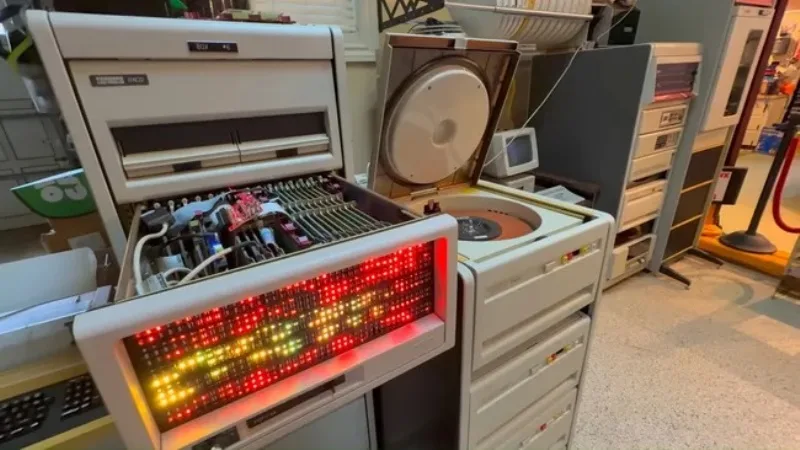
Dave Plummer, a veteran software engineer known for his significant contributions to Microsoft’s operating systems, recently showcased a notable technical demonstration by running a transformer-based artificial intelligence (AI) model on a PDP-11 mini-computer. The project highlights the capabilities of early computing hardware in relation to modern AI workloads.
The PDP-11, a historically significant machine originally released in the 1970s, features a processor clock speed of 6 MHz alongside only 64 kilobytes of RAM. Despite these severe limitations by today’s standards, Plummer managed to execute a transformer AI model on this device, demonstrating the feasibility of running AI workloads on hardware much older than the generations of engineers who currently debate the frontiers of artificial general intelligence (AGI).
This demonstration was intended partly to dispel misconceptions around AI complexity and resource demands. By bringing a modern AI architecture to such a constrained system, the demonstration underscores that even sophisticated AI methods can be adapted or understood within the context of simpler, legacy hardware.
Plummer, whose career included creating key Windows components, used this project to reveal what he describes as the “small dirty secret” behind AI development today—implying that AI’s power depends heavily on software engineering ingenuity and not just immense computational resources. The exact details of the model, including its size and operational metrics on the PDP-11, were not disclosed, but the demonstration alone is a compelling example of cross-era technology achievement.
Such projects attract attention in both the retro computing community and AI research fields, bridging the gap between past and present technologies. Enthusiasts often revisit vintage platforms to explore their limitations and potentials, and this effort by Plummer is among the more striking examples of applying legacy systems to contemporary challenges.
While the practical performance and application of running AI on hardware from over four decades ago is limited, the demonstration serves as a reminder of the fundamental principles of computing that persist regardless of hardware generation. It also illustrates the enduring creativity of software developers working within constrained environments to achieve innovative solutions.
Overall, this experiment stands as a unique intersection of computing history and current AI development, shedding light on how far both fields have advanced and how they remain connected through foundational concepts.
Former Microsoft engineer demonstrates a transformer AI model operating on a 6 MHz PDP-11 with just 64 KB of RAM.