Oracle’s Debt Challenges Threaten AI Data Center Project for OpenAI
July 21, 2026
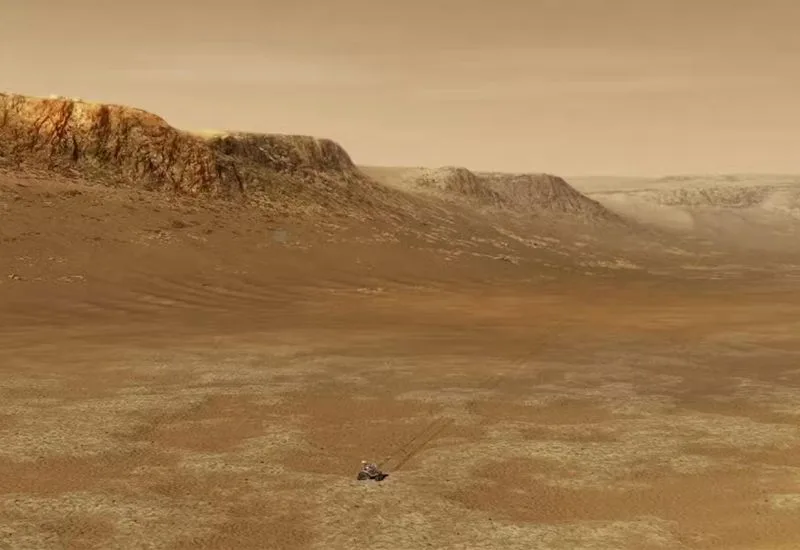
New findings from planetary scientists indicate that Mars, the red planet, once had a significantly warmer and wetter climate billions of years ago. This emerging evidence challenges the long-held belief that Mars was primarily cold and iced over during its early history.
The study focuses on the composition and distribution of minerals found on the Martian surface. By analyzing these minerals, researchers have inferred that the conditions on Mars several billion years back might have supported a climate more akin to Earth’s, rather than an icy and frozen landscape.
This warm and moist environment contrasts sharply with earlier models that envisioned Mars as dominated by extensive ice sheets and frigid temperatures. The presence of certain mineralogical formations suggests processes that are consistent with liquid water interacting with the planet’s surface over extended periods.
Understanding Mars’ past climate is critical not only for piecing together the planet’s geological and atmospheric evolution but also has implications for the future of human colonization efforts. A warm and wet ancient Mars potentially provided suitable conditions for life, and learning about these conditions enhances scientists’ ability to search for signs of past life on the planet.
The research offers valuable parallels for Earth scientists by providing insights into planetary climate dynamics and habitability, which might also inform understanding of Earth’s own climatic future. Mars serves as a natural laboratory to study environmental changes on a planetary scale.
While the specifics regarding the timeframe and duration of Mars’ warmer period remain subjects of ongoing investigation, the current findings represent a significant step toward revising traditional narratives about Mars’ ancient environment.
The implications for missions focused on Mars exploration and potential settlement are profound. A better grasp of the planet’s climatic history helps guide the search for underground water, past biosignatures, and suitable landing sites for future probes and crewed missions.
Further research and upcoming rover missions are expected to provide more detailed data to confirm and expand upon these results, painting a clearer picture of Mars’ transformation from a once hospitable world to the harsh environment seen today.
Recent research suggests Mars had a warm and wet climate billions of years ago, challenging earlier ideas of a frozen planet.