Honor Launches X7e Smartphone in Russia Featuring 7200mAh Battery and AI Shortcut Button
July 21, 2026
In a groundbreaking study, scientists have reported the first observation of structures within a beam of light moving faster than the beam itself. This phenomenon offers fresh insight into the complex wave-like behavior of light and its interaction with space and time.
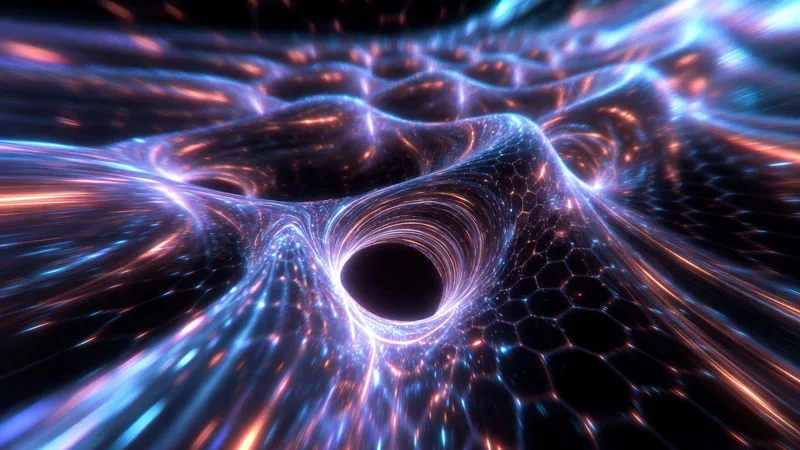
Light, composed of photons, exhibits dual properties of both particles and waves. As waves, light beams can create intricate patterns when propagating through space-time, similar to water waves forming ripples and eddies on a surface. This research illuminated how vortices—whirling motions known in fluids like water—also manifest within light beams.
These luminous vortices were observed moving at speeds exceeding that of the light beam itself. This counterintuitive result parallels how water vortices can outrun the current in a stream, showing that wave phenomena inside light beams can behave in ways not previously documented.
The discovery opens new avenues for understanding the fundamental nature of light beyond its traditional particle and wave descriptions. It also underscores the intricate dynamics occurring within light streams as they travel through space.
While the speed of light remains the ultimate limit for information transmission and causal effects in physics, the fact that internal wave structures within light can move faster than the beam demonstrates the complexity of wave phenomena and challenges simplified models of light behavior.
This observation has implications for fields studying optics, quantum physics, and potentially the manipulation of light in advanced technological applications where controlling wave characteristics is critical.
Further research is expected to explore the conditions and mechanisms behind these fast-moving vortices in light, as well as their effects on light’s properties and interactions.
Researchers have detected vortices inside light that travel faster than the light beam itself, revealing new wave-based behaviors of photons.