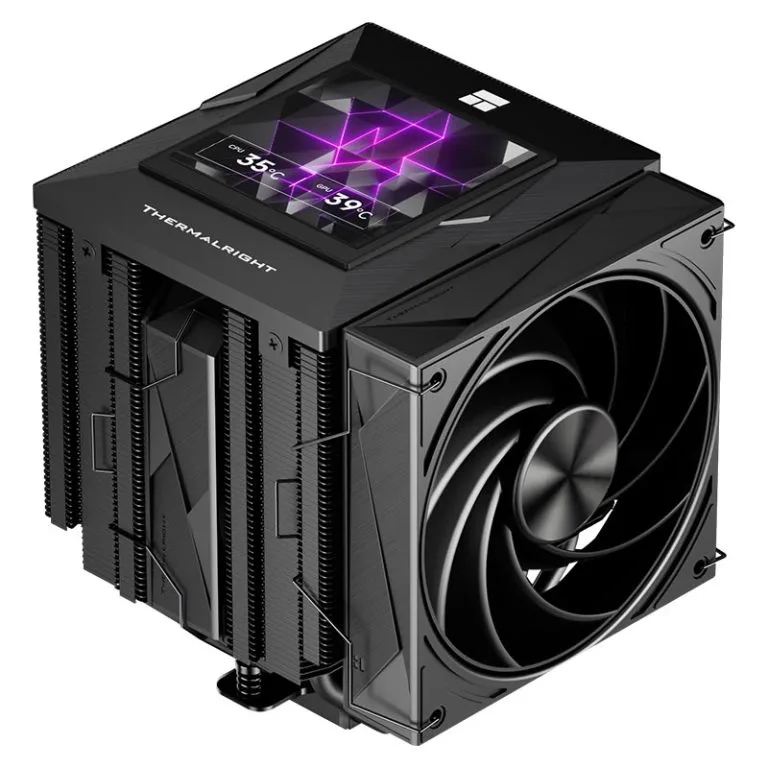
Thermalright Introduces Royal Pretor 130 Vision Cooler with Integrated 3.95-Inch Color Display
July 21, 2026

Traditional photonics technology, which relies on light pulses to operate electronic circuits, has long been constrained by the same materials that underpin silicon-based electronics. This overlap introduces inherent limitations characteristic of solid-state electronic devices.
In a breakthrough development, scientists have engineered an optical transistor using a droplet of liquid crystal integrated with polymers. This new approach marks a significant step forward for flexible photonics, introducing materials that diverge from conventional silicon while offering potential improvements in energy efficiency and overall chip performance.
The innovation centers around the use of liquid crystals combined with polymer substrates to fabricate photonic components that are not only flexible but also capable of efficient optical signal processing. Unlike solid-state microchips, the liquid crystal configuration exploits light manipulation properties at a microscopic scale, facilitating the development of optical transistors suited for next-generation photonic circuits.
By harnessing the dynamic optical characteristics of liquid crystals, researchers aim to circumvent certain drawbacks inherent to traditional silicon-based photonic devices. These materials can adapt to various mechanical stresses, enabling flexible chip designs suitable for an array of applications where bendability and conformability are essential.
This new direction in photonics can be particularly advantageous in creating energy-conscious devices. The optical transistor made from liquid crystal droplets promises increased energy efficiency without compromising the processing speed or functionality demanded by modern optical communication and computing systems.
The integration of these materials into polymer frameworks paves the way for scalable manufacturing techniques, potentially simplifying production while reducing costs. Flexible photonic chips can open new possibilities in wearable technology, flexible displays, and portable optical computing devices, where traditional rigid chips face physical and performance constraints.
While details on commercial availability, scalability, and specific technical performance metrics have yet to be disclosed, this advancement signals a promising avenue for photonics research. It underlines the ongoing shift toward novel materials that can enhance the synergy between photonics and electronics, pushing the boundaries of what is achievable in integrated circuits.
As innovation in flexible photonic technology progresses, further exploration of liquid crystals and polymer composites will likely continue to unlock their potential in optical data transmission, sensing, and processing, establishing a new class of energy-efficient, high-performance optical components.
Scientists have created an optical transistor from a liquid crystal droplet, advancing flexible photonic chips with improved energy efficiency and performance.