Oracle’s Debt Challenges Threaten AI Data Center Project for OpenAI
July 21, 2026
Efforts to dramatically increase memory density and alleviate the global shortage of operational memory recently took a significant step forward with the first silicon implementation of 3D X-DRAM. This advancement demonstrates the potential of stacked memory cells, a concept long seen as vital to the future of high-performance memory solutions.
Traditionally, increasing memory capacity has relied on planar scaling—making individual memory cells smaller—which faces physical and economic limits. To overcome these challenges, industry innovators have explored stacking memory cells vertically. This approach greatly enhances data density by utilizing the third dimension rather than expanding footprint on silicon wafers.
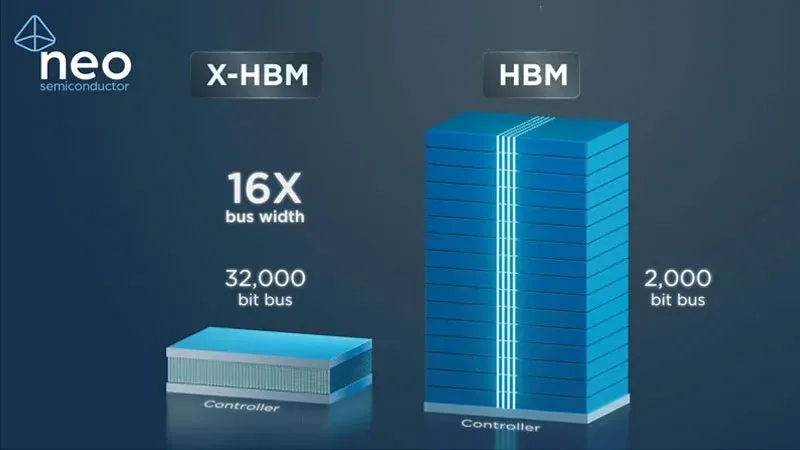
High Bandwidth Memory (HBM) represented an early commercial effort in stacked memory, offering significant performance benefits. However, HBM’s high cost and complexity have limited its widespread adoption. Meanwhile, the NAND flash memory industry advanced stacking technologies more aggressively with 3D NAND, successfully reshaping storage solutions on a mass scale.
The push to apply a similar 3D stacking technique to DRAM has been a notable challenge, primarily due to technical hurdles and manufacturing costs. Progress remained tentative until now.
The unveiling of the first 3D X-DRAM prototype in silicon marks a critical breakthrough. By leveraging vertical integration of DRAM cells, this new design promises to elevate storage density without the cost barriers that have slowed previous efforts.
This innovation is viewed as a crucial bridge between current DRAM technologies and the potential of next-generation memory architectures. Industry observers highlight that such memories could reshape the landscape of computing hardware, enhancing efficiency and expanding the capabilities of AI, data centers, and consumer devices that increasingly demand greater and faster memory.
The prototype’s successful fabrication has already attracted interest from several prominent investors. While specific technical details and commercial timelines remain under wraps, the achievement signals momentum toward a future where DRAM capacity constraints might be significantly relaxed.
As research and development continue, the tech sector is closely watching further advancements in 3D X-DRAM, anticipating its role in overcoming current limits in memory technology.
A pioneering 3D X-DRAM prototype has been created in silicon, marking a potential leap forward in memory density and addressing DRAM limitations.