Researchers Develop Propeller-Free Flying Robot That Soars Like a Bird Using Rising Air Currents
June 23, 2026
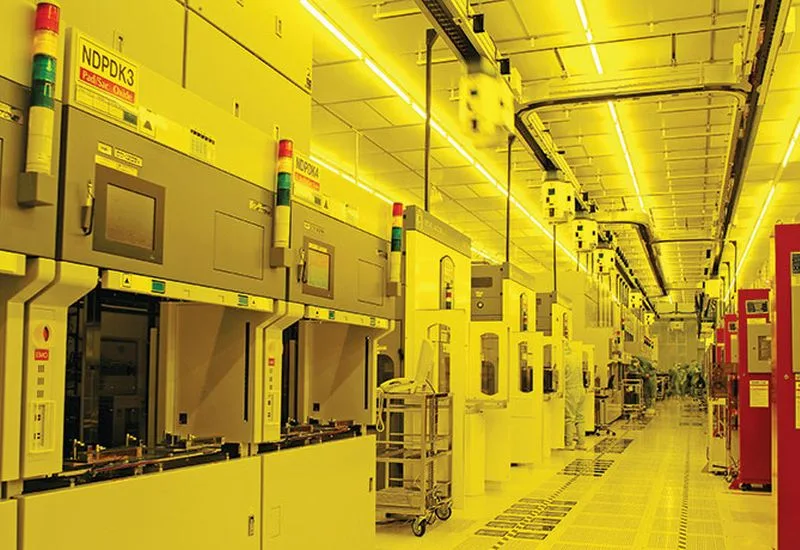
Taiwan Semiconductor Manufacturing Company (TSMC) is intensifying its transition from mature semiconductor manufacturing technologies towards more advanced process nodes. Recent developments indicate that nearly three-quarters of the company’s current revenue now comes from the production of chips utilizing cutting-edge technologies at 7 nanometers (nm) and below.
Industry sources reveal a sharp decline in the volume of chips produced using the 28nm process since the start of the year. This reduction marks a significant step in TSMC’s strategy to further prioritize its advanced process node capabilities, which are critical for meeting the growing demand for high-performance and energy-efficient semiconductors.
TSMC, the world’s leading contract chip manufacturer, has traditionally balanced its portfolio between mature and advanced semiconductor technologies. However, market dynamics and customer demands are steering the company to accelerate its migration to more technologically sophisticated nodes.
The increase in revenue share from 7nm and smaller process technologies reflects the broader industry trend where advanced nodes are crucial for applications ranging from mobile devices and high-end computing to automotive electronics and AI acceleration. These cutting-edge processes enable manufacturers to achieve improved power efficiency, higher transistor density, and better overall chip performance.
Conversely, production of chips using mature process nodes such as 28nm has been scaled back significantly. While these older technologies still serve sectors with less stringent performance requirements or cost-sensitive applications, TSMC’s decision to reduce their output underscores the company’s commitment to investing in future-oriented manufacturing capabilities.
This transition aligns with the company’s long-term vision to maintain technological leadership by adopting state-of-the-art semiconductor fabrication technologies. The shift also allows TSMC to optimize its production capacity and resources, focusing on the segments that offer higher margins and growth potential.
Although mature nodes like 28nm continue to have a role, particularly in markets such as automotive and industrial electronics, TSMC’s pivot highlights the increasing importance of advanced manufacturing technologies as the semiconductor industry navigates a rapidly evolving landscape.
Details regarding the impact on specific production volumes, capacity allocations, or customer implications have not been disclosed. However, the ongoing migration to smaller process geometries is a key factor shaping TSMC’s operational and financial strategies moving forward.
In conclusion, TSMC’s accelerated withdrawal from mature 28nm production in favor of advanced 7nm and sub-7nm technologies reflects its strategic response to the competitive semiconductor market’s demands. This emphasis on state-of-the-art node manufacturing is pivotal for the company as it continues to supply industry leading-edge chips for emerging technology sectors worldwide.
TSMC significantly reduces 28nm chip production as it moves to advanced nodes at 7nm and below, now generating nearly 75% of revenue from these processes.