Meta Plans $10 Billion Lease of Georgia Data Center to Anthropic
July 18, 2026
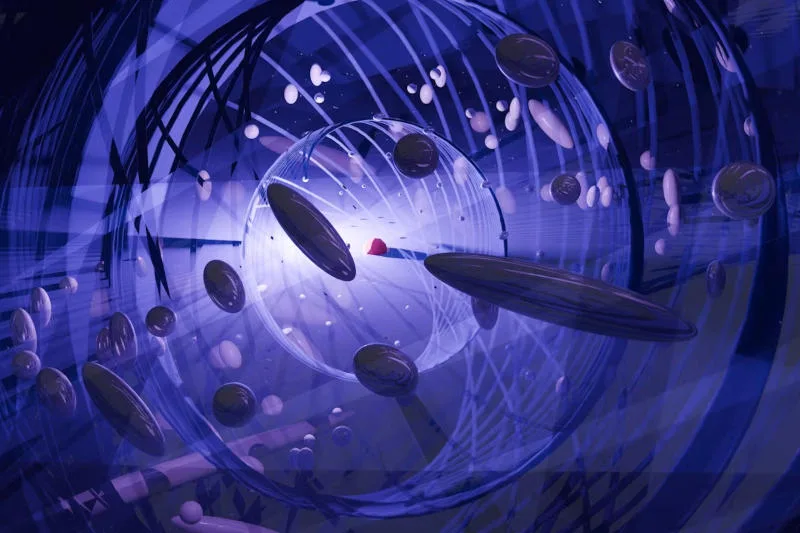
A team of researchers led by experts at the Indian Institute of Technology Bhubaneswar has made a significant advance in spintronic computing technology. They successfully synchronized over 105,000 nanooscillators within just 45 nanoseconds, marking an important milestone in the development of ultra-fast computational components that could potentially outperform current silicon-based transistors.
Nanooscillators are minuscule devices capable of generating high-frequency signals, which play a crucial role in spintronic systems—a promising area of research focused on leveraging electron spin in addition to charge for information processing. The ability to synchronize such a vast number of these oscillators rapidly is essential for creating computational units that operate at speeds and efficiencies beyond conventional semiconductor technologies.
Prior efforts in synchronizing nanooscillators have been limited to much smaller arrays or required longer timeframes. The breakthrough achieved by the research group allows these components to coordinate their oscillations in an unprecedented fraction of a microsecond, enhancing signal coherence and stability. This advancement could lead to spintronic architectures capable of performing complex computational tasks with greater speed and lower power consumption than today’s silicon transistors.
While the detailed practical implementations and commercialization pathways for this technology remain under development, the experimental results provide a promising foundation for future computing hardware. Spintronic devices using synchronized nanooscillators could eventually supplement or replace traditional transistor-based processors in certain high-performance and energy-sensitive applications.
The accomplishment highlights the potential of innovative materials science and nanoscale engineering in overcoming limitations faced by conventional microelectronics. Continued research in this area may redefine the fundamentals of how information is processed, stored, and transmitted in the next generation of computing platforms.
Scientists synchronized more than 105,000 nanooscillators in under 50 nanoseconds, advancing spintronic computing beyond silicon transistors.