Memory Chip Makers Face Potential DRAM Oversupply by 2028 Amid Massive Capacity Expansions
July 20, 2026
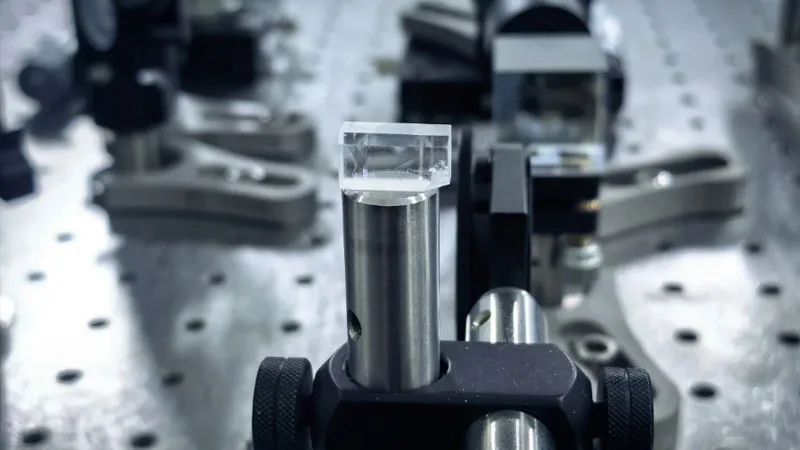
Scientists at the Xinjiang Technical Institute of Physics and Chemistry, part of the Chinese Academy of Sciences, have unveiled a new solid-state laser technology that addresses longstanding challenges in generating vacuum ultraviolet (VUV) radiation. This breakthrough centers on a novel nonlinear optical crystal known as ammonium fluoroborate (NH₄B₄O₆F, ABF), which facilitates compact and efficient VUV light sources.
The vacuum ultraviolet spectrum, which includes wavelengths shorter than 200 nanometers, has traditionally been difficult and expensive to access using solid-state lasers. Due to its high photon energy, VUV radiation is crucial for several advanced applications, but existing solutions often rely on bulky and costly vacuum-based systems.
The new nonlinear optical material developed by the Chinese team effectively overcomes these limitations, enabling smaller and more practical laser systems capable of producing VUV light. This development promises to have a significant impact across scientific research, space exploration, and semiconductor manufacturing.
In scientific contexts, compact VUV lasers can facilitate advanced spectroscopy and surface science techniques that require access to this challenging spectral range. In aerospace applications, such technologies could enhance sensor deployment and instrumentation operating in harsh or space environments.
For the semiconductor industry, particularly chipmakers, the ability to generate vacuum ultraviolet light more affordably and reliably may support next-generation lithography processes and inspection tools. Despite efforts by industry leaders such as ASML, producing cost-effective VUV sources has been a persistent hurdle. The ABF-based solid-state laser offers a promising new avenue to bridge this gap.
While the precise technical specifications and commercial availability of lasers based on the ABF crystal have not been disclosed, the foundational progress reported underscores a potential advance in photonic devices targeting a previously challenging wavelength domain.
This innovation exemplifies ongoing research aimed at expanding the capabilities and practical deployment of lasers operating in the vacuum ultraviolet region, an area poised to influence foundational and applied sciences as well as industrial technologies.
Chinese scientists create a compact solid-state laser with new nonlinear optical crystal, unlocking cost-effective access to vacuum ultraviolet light.