Plug-in Hybrids Surge in Popularity as Pure Internal Combustion Engine Cars Drop Out of China’s Top Five in May
June 10, 2026
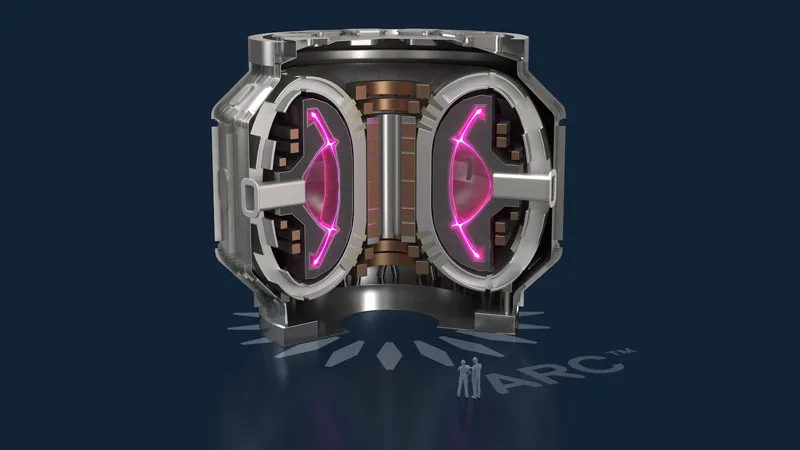
The pursuit of a self-sustaining nuclear fusion reactor—a potential game-changer for global energy production—remains one of the most challenging scientific endeavors of this century. Multiple players worldwide are striving to achieve this milestone, but exactly when and who will succeed first is still unclear.
Amid this dynamic landscape, Commonwealth Fusion Systems (CFS), a US-based energy startup, has shared insights explaining why it believes its fusion reactor could commence operations ahead of other contenders.
Currently, fusion development is a highly competitive field involving state-backed mega-projects and entrepreneurial startups alike. The ITER project in France represents one of the largest international efforts, building a colossal tokamak reactor aimed at demonstrating fusion feasibility. China, meanwhile, has significantly expanded its experimental tokamak program, advancing various design iterations.
On the private sector front, scores of startups are promising breakthroughs by leveraging innovative materials, superconducting magnets, and advanced plasma controls. Many of these companies have secured substantial contracts with leading hyperscale cloud and technology providers, signaling strong interest and investment in fusion’s commercial potential.
Despite these developments, the timeline for a fully operational, self-sustained fusion reactor remains uncertain. The scientific, engineering, and material challenges are formidable, and even well-funded initiatives carry inherent risks related to scalability, energy output, and continuous operation.
Commonwealth Fusion Systems aims to stand out by focusing on targeted technological advancements and a pragmatic approach to reactor design. The company emphasizes the integration of high-temperature superconductors for the magnetic coils, allowing stronger magnetic fields that can better contain the plasma, which is crucial for maintaining the fusion reaction.
This approach potentially enables a more compact and efficient reactor footprint compared to traditionally larger and more complex facilities. CFS advocates that optimizing these parameters could accelerate the development timeline and bring fusion power online earlier than some competing projects.
While comprehensive data on CFS’s reactor plans remain limited, their public disclosures hint at a methodical roadmap backed by expert collaborations and strategic partnerships. Their progress is emblematic of the broader fusion sector’s shift toward scalable, commercially viable solutions rather than only experimental demonstration stages.
As governments, private companies, and research institutions continue to race toward fusion’s promise, Commonwealth Fusion Systems is positioning itself as a serious contender with potentially impactful innovations. The ultimate outcome of this global endeavor will significantly influence the future energy landscape and the world’s capacity to meet rising power demands sustainably.
Amid intense global efforts in fusion technology, Commonwealth Fusion Systems outlines reasons its reactor may achieve self-sustaining fusion first.