
Popular PC Components in Russia Highlight Nvidia RTX 50 Series and 1TB NVMe SSDs
July 21, 2026
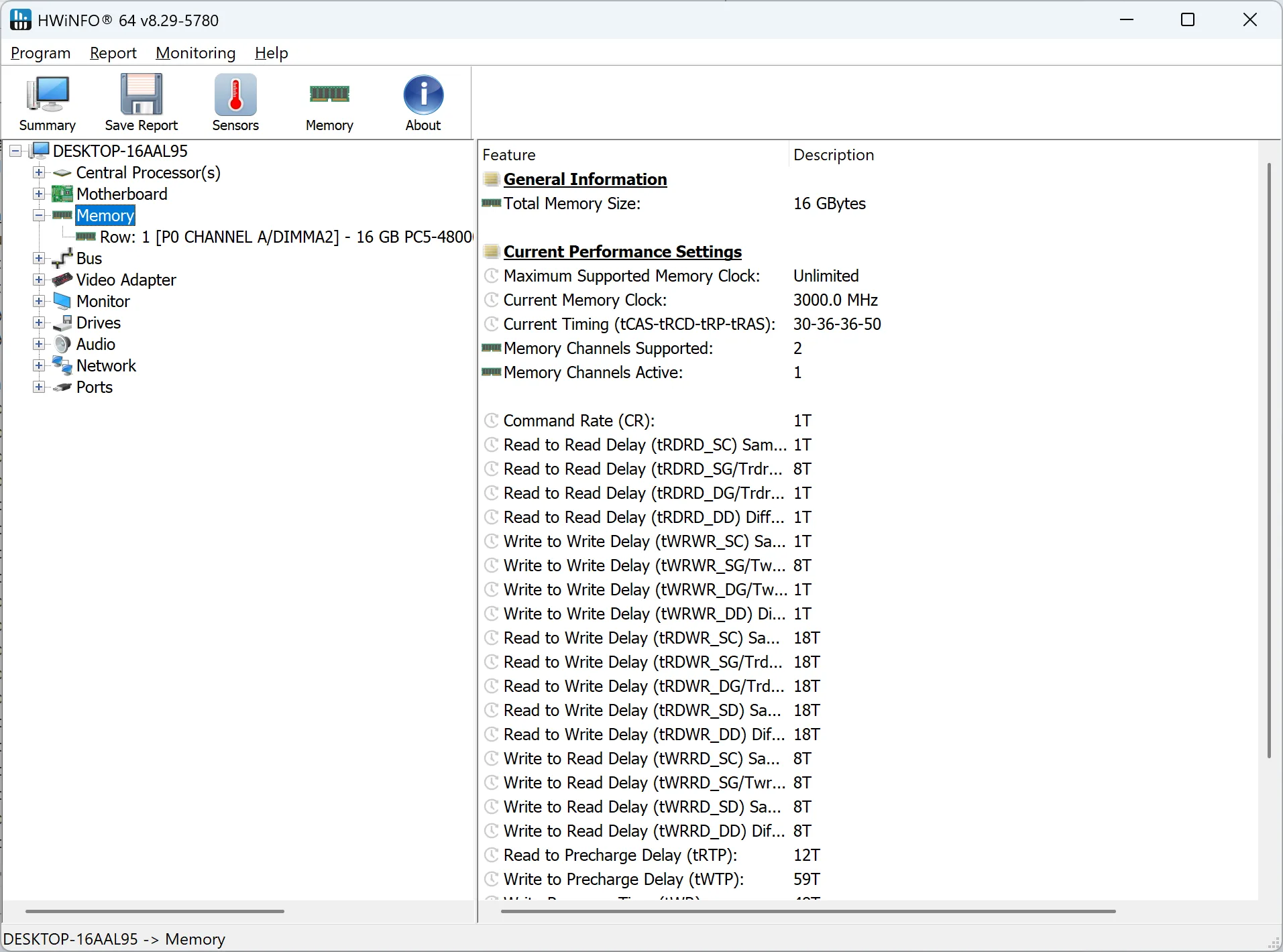
As DDR5 memory prices remain high, PC builders and enthusiasts are increasingly exploring ways to reduce costs without significantly sacrificing system performance. One common approach involves choosing between dual-channel and single-channel memory configurations when equipping Ryzen-based systems, especially those built around the latest Zen 4 and Zen 5 architectures.
To understand the impact of memory configurations, several tests have focused on 16GB DDR5 setups, comparing a classic dual-channel 2×8GB kit against a single-module 1×16GB alternative. Both options offer the same total memory capacity, which makes this a practical comparison for users seeking to save money without dropping to an 8GB baseline.
Ryzen processors, renowned for their strong memory performance, are especially sensitive to memory bandwidth and latency, which are influenced by channel configurations and RAM speed. Dual-channel setups generally provide increased bandwidth by operating two memory sticks in parallel, while single-channel configurations rely on a single module and thus halve that potential bandwidth.
Testing on Ryzen CPUs with Zen 4 and Zen 5 cores revealed that systems using a single 16GB module experienced a reduction in performance by approximately 15% relative to the 2×8GB dual-channel equivalent. This disparity manifested across various workloads, highlighting the importance of memory subsystem design even as DDR5 technology advances.
Importantly, both approaches come with their own sets of drawbacks. Dual-channel configurations can incur higher initial costs due to the need for two separate memory modules, but tend to maintain better overall system responsiveness and computational throughput. On the other hand, a single 16GB stick may offer a more simplified upgrade path and potentially lower upfront investment but at the cost of bandwidth limitations inherent to single-channel operation.
Users considering savings in their memory budget must weigh these trade-offs, especially when building systems around Ryzen platforms that benefit from high memory performance. While 16GB remains a commonly targeted capacity, optimizing for dual-channel operation is still advisable when feasible.
As DDR5 prices gradually improve, future options may make higher capacity dual-channel kits more accessible. Until then, understanding the technical implications of memory configuration choices is critical for maximizing the cost-efficiency of a Ryzen-powered PC.
Comparing 16GB DDR5 RAM setups on Ryzen Zen 4 and Zen 5 processors reveals performance trade-offs between dual-channel and single-channel configurations.