TSMC Plans $265 Billion Investment to Expand U.S. Chip Manufacturing Amid Rising Competition
July 20, 2026
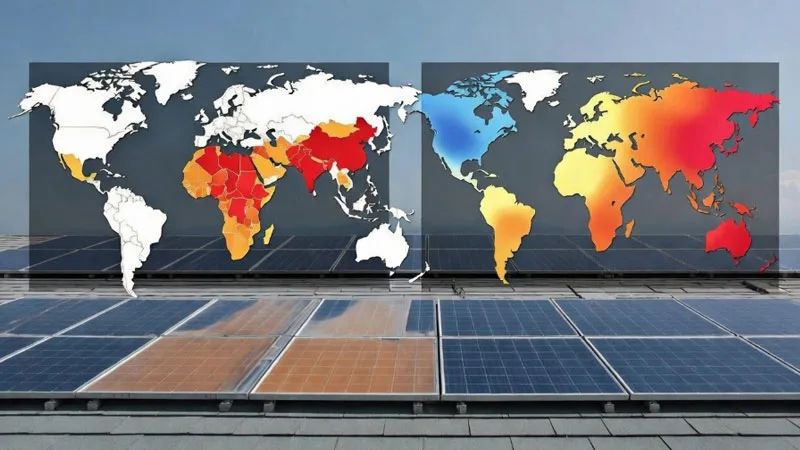
A recent global study conducted by an international group of scientists has revealed that rising temperatures associated with global warming significantly accelerate the deterioration of photovoltaic systems installed on building rooftops. This deterioration is caused by increased thermal stress, which can speed up the aging process of solar modules, potentially impacting the longevity and cost-effectiveness of rooftop solar technology.
The research highlights that solar panels mounted on rooftops are particularly susceptible to overheating due to limited ventilation spaces. When installed with minimal gaps, rooftop panels tend to trap heat more effectively, creating hot spots that contribute to faster degradation of the solar cells and associated components. This contrasts with ground-mounted solar arrays, which typically have better airflow and temperature regulation.
As rooftop solar panels endure prolonged exposure to elevated temperatures, especially in regions affected by climate change-induced heatwaves, their performance and lifespan may decline at a greater rate than previously anticipated. This phenomenon poses concerns for homeowners and commercial property owners who rely on solar installations for sustainable power generation and energy savings.
The accelerated wear implies that without adaptive measures to mitigate heat buildup, the overall costs of solar electricity generated from rooftop systems could rise over time. Increased maintenance, more frequent replacements, or reduced efficiency would contribute to higher expenses, undermining the economic advantages that have made solar energy a favored solution.
The study underscores the need for improved design and installation practices that enhance ventilation and thermal management for rooftop photovoltaic systems. These could include optimizing mounting structures to allow better air circulation or developing materials and panel technologies more resilient to heat stress.
While solar energy remains a key component in the transition toward cleaner power, addressing the challenges posed by climate change on the infrastructure itself will be crucial. Strategic interventions are required to preserve the durability and cost-effectiveness of rooftop solar panels as global temperatures continue to climb.
Climate change-driven temperature rise speeds up deterioration of rooftop solar panels, posing risks to solar power affordability unless mitigation steps are taken.