Hisense A10 Smartphone Features Primary E Ink Display with Detachable Magnetic LCD Screen
July 12, 2026
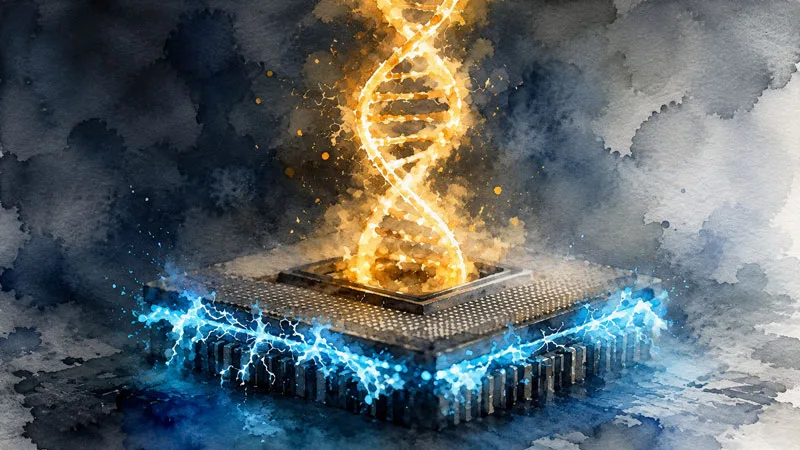
A team of researchers at Harvard University has announced the development of a novel silicon-based DNA printer capable of synthesizing multiple DNA molecules at once. This advancement marks a significant step forward from traditional platforms, which typically produce only a limited number of DNA sequences simultaneously.
The innovation centers on repurposing a silicon semiconductor chip into a compact device designed for the parallel synthesis of numerous DNA strands. This approach not only enhances synthesis capacity but also introduces notable improvements in the environmental sustainability of the process.
Conventional DNA synthesis technologies have struggled with scaling, often limited to creating about a dozen sequences at once. The new silicon-based printer overcomes this barrier by leveraging existing semiconductor fabrication techniques, enabling the high-throughput production of DNA molecules in parallel.
This miniaturized setup offers promising applications in various fields such as medicine, where synthetic DNA is crucial for diagnostics and therapies, as well as fundamental biological research. Additionally, the technology holds potential for expanding the feasibility of DNA as an ultra-dense data storage medium.
One of the most important aspects of this development is the reduction of environmental impact during DNA synthesis. Given the growing interest in DNA data storage—which could require substantial scaling—ensuring an eco-friendly chemical process is essential. The silicon DNA printer addresses this challenge by optimizing reagent usage and minimizing waste production.
The versatility and efficiency of the silicon-based system could open new opportunities for researchers and industries exploring synthetic genetics and molecular data storage. Although specific details regarding commercialization or availability have not been disclosed, this breakthrough lays foundational work for next-generation biotechnology platforms.
Overall, Harvard’s silicon DNA printer represents a promising advancement, merging semiconductor technologies with molecular biology to push the boundaries of DNA synthesis capabilities while prioritizing sustainability. This intersection of fields may accelerate the development of innovative applications in healthcare, scientific research, and digital information preservation.
Harvard scientists created a silicon chip printer that synthesizes many DNA molecules simultaneously, boosting eco-friendly data storage and research.