Steam Machine Sales Surpass Expectations with Weekly Figures Reaching Up to 15,000 Units
July 19, 2026
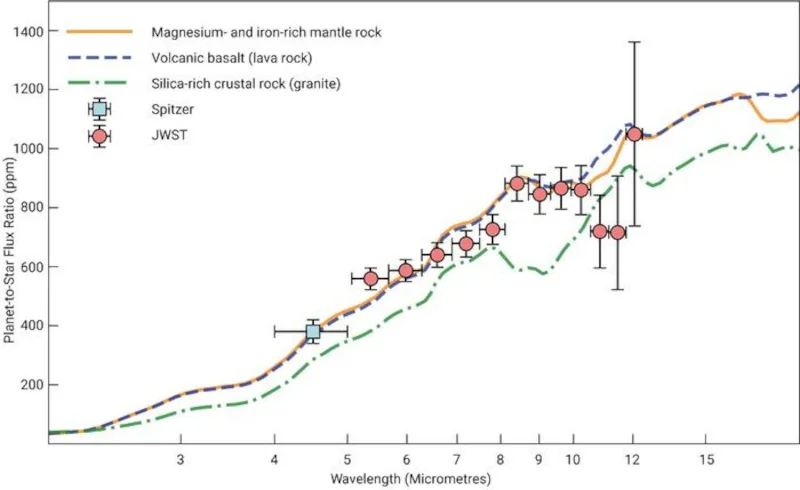
NASA’s James Webb Space Telescope has achieved a significant breakthrough by conducting the first direct surface examination of an exoplanet beyond our Solar System. This pioneering observation focused on the distant world known as LHS 3844 b, providing new insights into its physical characteristics.
The analysis showed that LHS 3844 b is a dark, intensely hot planet lacking a substantial atmosphere. Its surface conditions bear a resemblance to Mercury, the innermost planet in our own Solar System, marked by a barren and lifeless landscape exposed to extreme temperatures. This finding differentiates LHS 3844 b from many previously studied exoplanets, where atmospheric compositions were the primary focus.
By directly interpreting the geology of this distant planet, astronomers have taken a crucial step towards understanding the nature of rocky exoplanets outside our Solar System. Studying surface features, rather than just atmospheric layers, opens new pathways in comparative planetology that could shed light on planetary formation and evolution processes on a cosmic scale.
The capability to examine such faraway worlds in detail remains a relatively new achievement for space-based telescopes, highlighting the technological advancements embodied by the James Webb telescope since its deployment. This progress not only expands knowledge of individual exoplanets but also broadens the scope for investigating environments that may share similarities with the terrestrial planets of our own neighborhood in space.
While many questions remain about the exact composition and geological activity of LHS 3844 b, this initial surface characterization represents a milestone in the ongoing quest to map the diverse planetary bodies populating the galaxy.
NASA’s James Webb Telescope has provided the first direct surface study of an exoplanet, revealing a dark, scorching, atmosphere-free world.