App Store Sees Surge in New Apps Amid Growth of No-Code Platforms in Early 2026
July 21, 2026
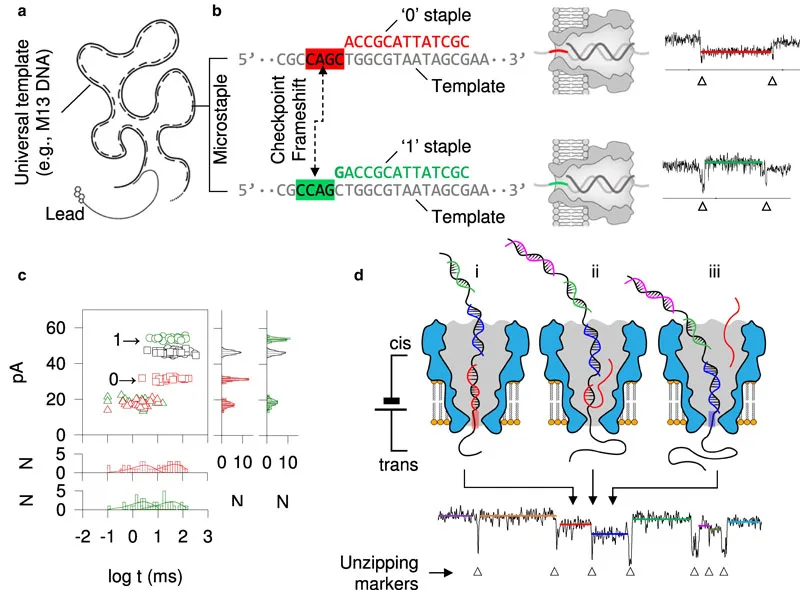
Researchers from the University of Missouri have unveiled a pioneering prototype for DNA-based data storage that marks a significant advance in the field. Unlike previous DNA storage systems primarily designed for one-time archival recording, this new development introduces the ability to repeatedly erase and rewrite information.
DNA has long been considered a promising medium for data storage due to its exceptional density and durability. However, its application has generally been limited to permanent archival storage because rewriting data typically requires complex biochemical processes involving nucleotide synthesis and enzyme reactions.
The newly developed method circumvents these challenges by eliminating the need for nucleotide synthesis and enzymes during data encoding and retrieval. Instead, the process relies solely on electrical mechanisms, making operations of writing and reading information significantly simpler and more efficient.
This approach represents a shift from conventional biochemical workflows to an electrical control system, which could pave the way for faster, more practical DNA data storage technologies. The ability to rewrite data multiple times positions this method as a flexible alternative to static DNA archives and broadens the potential of molecular storage technologies.
While detailed technical specifications such as capacity, speed, and practical implementation timelines have not yet been disclosed, this breakthrough demonstrates a fundamental advancement in integrating DNA storage with electronic methods. It offers promising prospects for the future development of compact, long-lasting, and rewritable memory solutions that harness biological molecules.
As data storage demands continue to grow exponentially, innovations like this underline the ongoing exploration of unconventional materials and processes to meet future technological needs. The electrical rewrite technique could potentially address some of the limitations in current DNA storage platforms and inspire further research to refine and commercialize this technology.
A new DNA data storage prototype enables rewritable capabilities and simplifies read/write procedures without nucleotide synthesis or enzymes.