
Michigan Residents Sue AI Data Center Over Persistent Noise Disruption
July 28, 2026
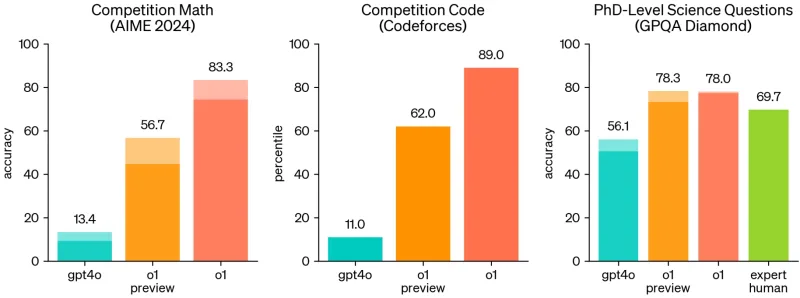
Recent advancements in artificial intelligence have led to the development of new models capable of verifying factual information and engaging in step-by-step reasoning before delivering responses. These breakthroughs mark a significant improvement in AI reliability and the quality of interactions between machines and human operators.
Unlike earlier AI systems that often generated responses without cross-checking, these next-generation models incorporate mechanisms to validate their outputs. This fact-verification process helps reduce the dissemination of incorrect information, which has been a critical challenge in the deployment of AI assistants and automated content generators.
In addition to enhanced fact-checking, these models demonstrate an increased ability to perform sequential reasoning. This means they can analytically break down complex problems into smaller, logical steps, mimicking a more human-like thought process. This stepwise reasoning capability allows for more coherent and contextually accurate answers, benefiting applications ranging from customer support to content creation.
Despite these improvements, experts emphasize that such capabilities do not equate to the achievement of artificial general intelligence (AGI). AGI refers to a machine’s ability to understand, learn, and apply knowledge across a broad range of tasks as flexibly and independently as a human. Although the current models show specialized strengths, they still operate within constrained parameters and lack the full contextual understanding and adaptability characteristic of AGI.
The distinction underscores ongoing challenges in AI research. Researchers continue to explore methods to bridge the gap between advanced task-specific AI and broader cognitive abilities embodied by AGI. Innovations in model architectures, training methodologies, and integration of real-world knowledge are among areas being actively pursued.
In practical terms, the current AI systems serve as valuable tools by enhancing accuracy and dependability in numerous fields. The improved fact-verification reduces misinformation risks, and the sophisticated reasoning supports more nuanced interaction. Nonetheless, creators and users alike must recognize these advances as incremental steps rather than a culmination of AI development.
The trajectory of AI technology indicates a future where machines can assist with increasingly complex tasks, but the realization of fully autonomous, general-purpose artificial intelligence remains a challenge for the near term. Continued investment in research and cautious optimism about AI’s potential will likely define the landscape in the coming years.
Advanced AI models now verify facts and reason sequentially, improving response accuracy, yet they remain distinct from true artificial general intelligence.