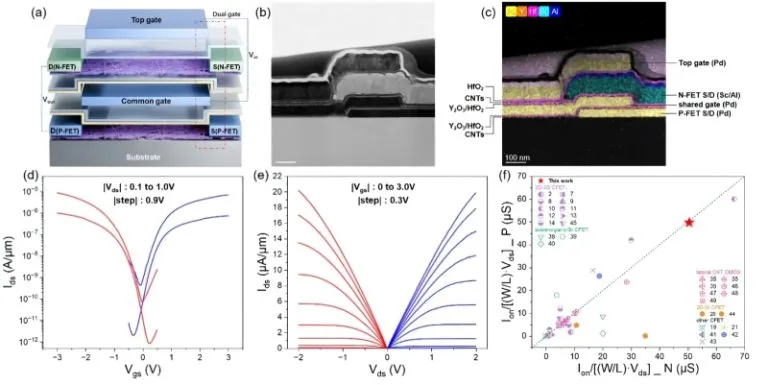
Advancements in CFET Technology Promise Faster, Smaller, and More Reliable Semiconductor Transistors
July 21, 2026
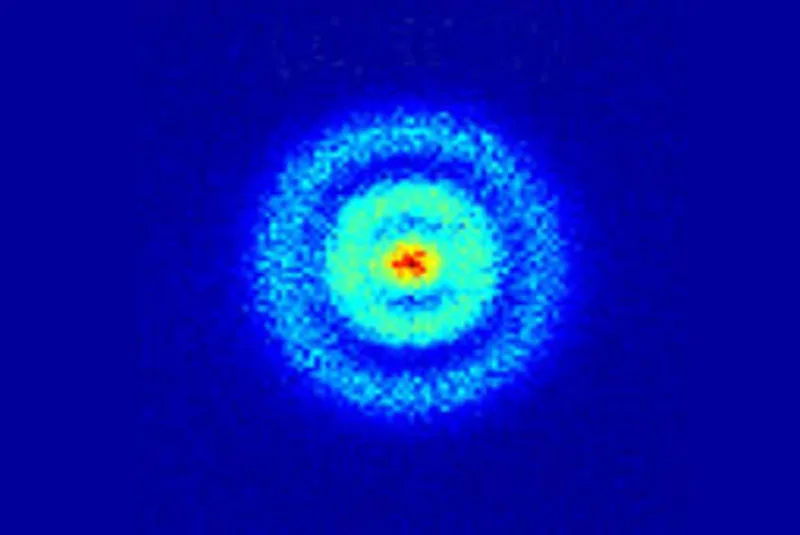
After more than 15 years of debate within the physics community, recent research efforts have addressed the discrepancy regarding the proton’s size that emerged around 2010. This anomaly challenged the previously precise understanding of a fundamental particle’s dimensions, raising questions about measurement accuracy and theoretical models in particle physics.
The proton radius anomaly surfaced when measurements conducted in 2010 reported a proton radius that significantly differed from values established by earlier experiments. Given that the properties of fundamental particles such as the proton have been accurately determined to an extraordinarily exact degree—often extending precision to the 12th decimal place—this deviation was unexpected and triggered extensive experimental and theoretical investigations.
In recent developments, two independent studies presented converging conclusions about the proton’s size, approaching the issue from different methodological perspectives. Their findings collectively suggest that the previously observed anomaly does not imply any fundamental flaw in particle physics or unknown new physics but rather can be understood within the framework of existing theories when experimental and analytical nuances are taken into account.
This resolution is a significant milestone, as the proton’s radius is a critical parameter in quantum electrodynamics and impacts numerous related fields. The ability to measure and confirm this scale with high accuracy ensures the stability and reliability of models describing atomic and subatomic structures.
While the exact details of the corrections or reinterpretations that resolved the discrepancy have yet to be elaborated broadly, the current consensus underscores the robustness of particle physics and precision measurement technologies. The new results reinforce confidence in the standard assumptions used to describe particle sizes and interactions.
These advancements highlight the ongoing nature of scientific inquiry, where anomalies prompt rigorous reassessment and refinement. The proton radius puzzle, once a perplexing outlier, now illustrates how persistent investigation can clarify even the finest details of the natural world.
As particle physics continues to push the boundaries of measurement and theory, this case serves as a reminder that precision and methodology remain key to resolving mysteries and confirming foundational knowledge.
Two recent studies shed light on the proton radius anomaly first observed over 15 years ago, offering clarity on a fundamental physics question.