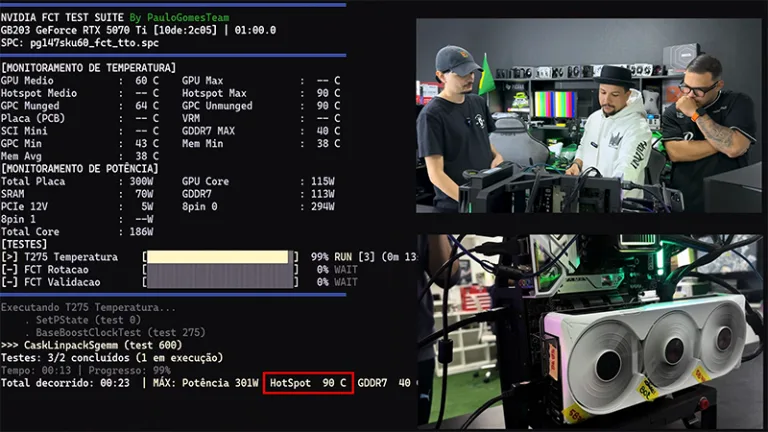
Nvidia GPUs Can Report Individual GDDR6 and GDDR6X Memory Chip Temperatures, Enthusiasts Discover
July 19, 2026

Researchers from the United States have made a significant breakthrough by deciphering the mechanism through which diamonds enter a superconducting state. While the unique properties of diamond-based superconductivity have been recognized for some time, the specifics of the process had remained elusive until now.
This new understanding not only confirms the phenomena but also opens the door to engineering diamonds with tailored superconducting characteristics. Such advancements hold considerable promise for emerging technologies, particularly in the fields of quantum computing and hybrid electronic devices.
The discovery comes as a crucial step towards harnessing diamonds beyond their conventional role in jewelry and industrial applications. Superconductivity, the ability of a material to conduct electricity without resistance, can transform the performance and efficiency of electronic components. Diamonds exhibit this property under certain conditions, but the underlying transition mechanism had, until recently, remained a scientific mystery.
By elucidating this mechanism, scientists can now move beyond mere observation to active manipulation, allowing precise control over superconducting behavior. This capability is particularly vital in quantum computing, where superconducting materials form the backbone of qubits and other essential components. Additionally, hybrid electronics, which blend different types of electronic systems, may benefit from these diamond-based superconductors due to their exceptional thermal properties and durability.
Further research is expected to refine the manufacturing processes and explore the integration of superconducting diamonds into practical devices. While specific applications and commercialization timelines have not been disclosed, the study marks a foundational advance for future technological innovations.
This achievement underscores the ongoing importance of materials science research in developing next-generation electronics. By tapping into unconventional materials like diamond, scientists continue to push the boundaries of what is possible in computation and electronic engineering.
US researchers have revealed how diamonds become superconducting, enabling tailored applications in quantum computing and hybrid electronics.