Advancements in CFET Technology Promise Faster, Smaller, and More Reliable Semiconductor Transistors
July 21, 2026
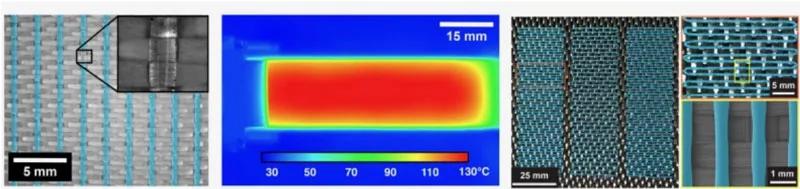
Scientists at North Carolina State University have introduced a breakthrough in materials science with the creation of a carbon fiber-based metamaterial capable of autonomously repairing cracks and delaminations. This innovation addresses a prominent limitation in composite materials, which traditionally suffer from structural degradation over time, undermining their durability in demanding applications such as aerospace.
Composite materials, especially those reinforced with carbon fibers, are valued for their strength-to-weight ratio and are commonly utilized in high-performance settings. However, their susceptibility to micro-cracking and delamination can lead to significant performance deterioration and ultimately, failure. The development of a self-healing metamaterial introduces a potential solution to extend the operational lifespan of such materials considerably.
The research team engineered the metamaterial incorporating mechanisms that enable autonomous restoration of internal damage repeatedly. Their prototype successfully endured 1,000 healing cycles, manifesting a remarkable ability to maintain its structural integrity through continual self-repair. This capability could revolutionize material reliability, particularly in scenarios where maintenance or replacement is challenging, such as in space exploration vehicles that are envisioned to operate on timescales spanning decades or centuries.
While current spacecraft materials do not possess such regenerative properties, this innovation marks a significant step toward the realization of ‘everlasting’ material systems. By integrating carbon fiber composites with self-healing features at the microstructural level, the metamaterial potentially ensures durability that aligns with the rigorous demands of long-duration missions and extreme operating conditions.
The exact mechanisms enabling this self-repair functionality involve the strategic design of the composite’s microarchitecture, although detailed explanations remain part of ongoing research. Nonetheless, the implications for industries reliant on composite materials are substantial, encompassing aerospace, automotive, civil infrastructure, and beyond.
Further development and scaling of this technology will be essential to evaluate its practical deployment and long-term effects. Still, this advancement represents a promising leap toward creating materials that can autonomously sustain their performance across extensive lifespans.
Researchers develop a carbon fiber-based metamaterial that autonomously repairs cracks, potentially extending material lifespan to centuries.