TSMC Plans $265 Billion Investment to Expand U.S. Chip Manufacturing Amid Rising Competition
July 20, 2026
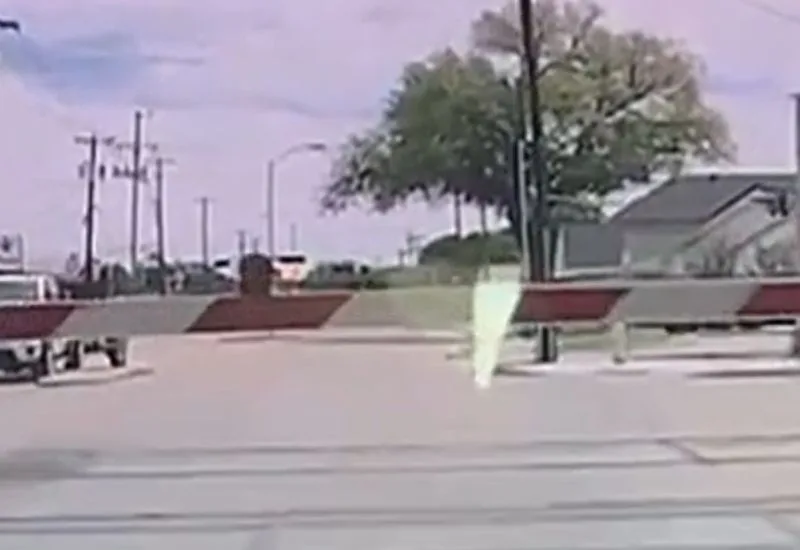
In a recent incident in the United States, a Tesla vehicle operating under Autopilot came dangerously close to a collision when it crossed a railroad crossing despite the barrier being closed. This episode has highlighted ongoing concerns regarding the reliability of Tesla’s active driver assistance systems in high-risk scenarios such as railway intersections.
Tesla’s driver assistance technology, designed to support drivers in a variety of complex environments, includes features meant to recognize and safely navigate railroad crossings. However, the effectiveness of these systems has been questioned following multiple reports of erratic behavior in close proximity to sources of elevated danger.
Railroad crossings require careful detection and interpretation of multiple signals, including the presence of lowered gates, flashing lights, and oncoming trains. In this case, the Autopilot system seemingly misjudged the closed barrier, allowing the vehicle to proceed across the tracks unexpectedly.
Instances like this underline the limitations of current AI-based driver assistance in safely managing situations that involve sudden or non-standard obstacles. While Tesla continuously updates its software to improve Autopilot’s capabilities, scenarios involving infrastructure elements such as railroad crossings continue to pose significant challenges to fully autonomous or semi-autonomous driving technology.
The near accident underscores the need for drivers to remain vigilant, even when relying on advanced automation systems. Tesla emphasizes that Autopilot is not meant to replace active driver attention, especially in situations involving complex safety risks.
As autonomous technologies evolve, regulatory bodies and manufacturers face increasing pressure to enhance the robustness of driver assistance systems in real-world conditions. The goal remains to reduce human error and improve road safety, yet incidents like the recent railroad crossing close call serve as important reminders of the technology’s current boundaries.
Safety advocates continue to call for improved integration of sensor data and stricter requirements for fail-safe mechanisms at hazardous locations such as rail crossings. The incident with Tesla’s Autopilot adds to a growing dossier of cases that could inform future regulatory actions and technological refinements for semi-autonomous driving solutions.
While Tesla remains a leader in the electric vehicle and driver-assist segment, such episodes highlight the critical balance between innovation and safety as the automotive industry transitions toward greater automation.
A Tesla vehicle using Autopilot narrowly avoided a collision after crossing a closed railroad barrier in the US, raising concerns about the system’s response near train crossings.