Memory Chip Makers Face Potential DRAM Oversupply by 2028 Amid Massive Capacity Expansions
July 20, 2026
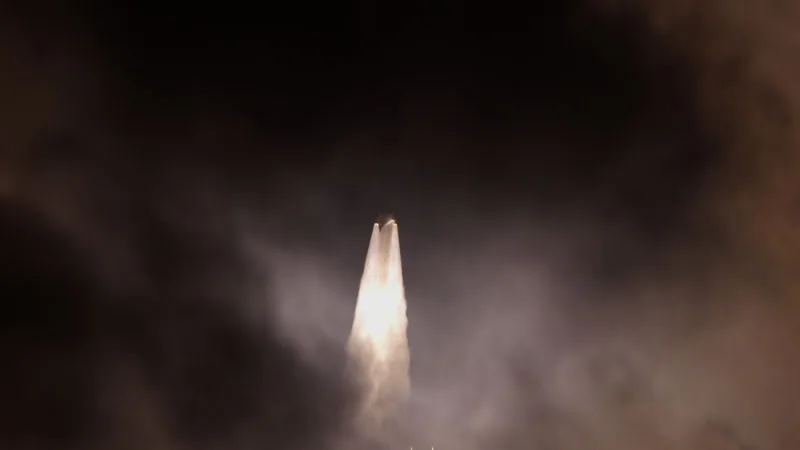
United Launch Alliance (ULA) experienced another turbulent launch with its Vulcan Centaur rocket during its fourth flight on February 12, 2026. Despite encountering a serious anomaly shortly after liftoff, the rocket was able to complete its mission successfully.
The Vulcan Centaur rocket, designed to eliminate reliance on Russian propulsion technology, was carrying a payload for the U.S. Department of Defense during this mission. Approximately 30 seconds after launch, an abnormal ignition event was observed in one of the rocket’s side booster engines. Visible flames and sparks appeared near the engine nozzle, which caused the vehicle to begin rotating uncontrollably around its longitudinal axis.
This kind of anomaly raised immediate concerns about the stability and safety of the launch. ULA closely monitored the situation, and although the rocket exhibited these irregular flight dynamics, it maintained trajectory stability sufficient to reach its intended orbit. The mission objectives were ultimately achieved.
This incident marks the second time in the last three Vulcan Centaur launches that a similar engine failure or anomaly has occurred during liftoff. Previously, earlier missions experienced comparable engine irregularities, bringing attention to challenges in the rocket’s propulsion system during its early operational phase.
Developed to bolster U.S. space launch independence, particularly by replacing Russian-made engines, Vulcan Centaur remains a critical vehicle for both commercial and government space missions. The repeated launch anomalies, however, represent operational challenges that United Launch Alliance engineers are expected to address moving forward to enhance the vehicle’s reliability.
The February launch demonstrated the rocket’s capability to withstand severe in-flight disturbances and still accomplish mission goals, albeit with increased risk factors. As the Vulcan Centaur program continues, thorough analysis and corrective measures will be essential to prevent similar issues in future flights and ensure consistent performance for critical payload deliveries.
United Launch Alliance’s Vulcan Centaur rocket encountered an engine anomaly at liftoff but successfully fulfilled its mission despite unusual flight disturbances.