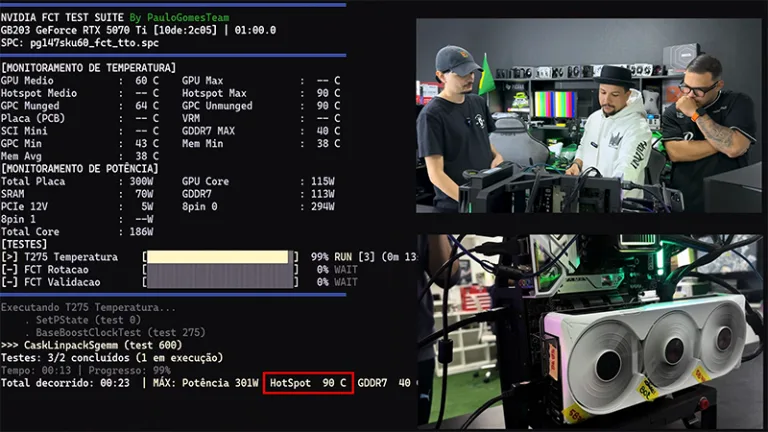
Nvidia GPUs Can Report Individual GDDR6 and GDDR6X Memory Chip Temperatures, Enthusiasts Discover
July 19, 2026
The U.S. government is increasing its influence over the release and distribution of cutting-edge artificial intelligence models developed by leading technology companies. A newly established federal agency will play a central role in approving the deployment of these advanced AI systems to the wider market.
<pTraditionally, the development and launch of state-of-the-art AI models have been driven primarily by private sector innovation, led by key players such as OpenAI and Anthropic. However, recent developments indicate a shift, with governmental authorities asserting more direct control over when and how such AI technologies become publicly available.
According to reporting from CNBC, this new governmental body is tasked with evaluating advanced AI models—particularly those originating from the United States—before they can be widely released. This marks a significant pivot in the AI ecosystem, signaling increased regulatory oversight and formalized governmental involvement in the technology’s commercialization process.
The agency’s formation reflects growing concerns within the U.S. regarding the rapid evolution of AI capabilities and their potential impact across multiple sectors. By instituting a review mechanism, the government aims to exercise greater oversight to address national security, ethical considerations, and societal impacts tied to the proliferation of these technologies.
This approach suggests that regulatory frameworks for AI will now closely parallel those commonly seen in other highly sensitive technologies, where government permission is required prior to mass distribution. As a consequence, AI firms operating in the U.S. may need to navigate additional compliance layers in their development cycles and release strategies.
While details regarding the specific criteria or processes employed by this new regulatory authority remain limited, the establishment of this institution underscores the increasing importance of governmental roles in shaping AI’s trajectory. It also signals to AI developers the necessity of engagement with federal oversight mechanisms as part of their innovation and deployment efforts.
Industry observers are closely monitoring how this shift could influence competition and innovation within the AI sector. Balancing national interests and fostering technological progress will pose ongoing challenges as the landscape evolves. The new oversight structure will likely play a pivotal role in moderating these dynamics moving forward.
Overall, the U.S. government’s growing ability to regulate advanced artificial intelligence models represents a substantial development in technology governance. How this influence will affect future AI releases and the global AI market remains to be seen, but it marks a clear moment of increased federal involvement in this cutting-edge field.
A new U.S. government body will oversee the release of advanced AI models developed domestically, marking a shift in regulatory power.