Honor Launches X7e Smartphone in Russia Featuring 7200mAh Battery and AI Shortcut Button
July 21, 2026
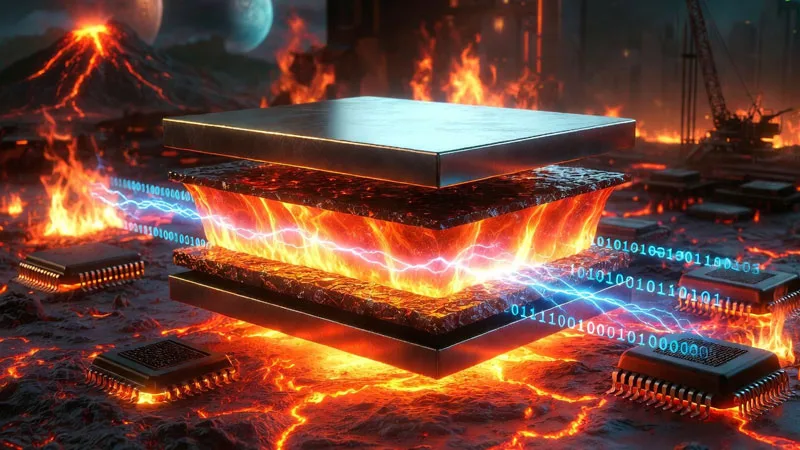
A team of researchers from the University of Southern California (USC) has created a groundbreaking electronic memory device that can operate under extreme temperature conditions unlike any conventional technology. This new type of memory, known as a memristor, has demonstrated reliable functionality at temperatures reaching 700 degrees Celsius.
Traditional electronic components typically fail at temperatures above 200 degrees Celsius due to material degradation and loss of performance. However, the memristor developed by the USC scientists was designed to withstand temperatures that exceed even the melting point of lava. This remarkable resilience opens up new possibilities for electronic systems operating in environments previously considered too hostile for sensitive devices.
Extreme temperature durability is of particular interest in applications such as planetary exploration, where probes and instruments must endure harsh surface conditions, including on planets like Venus, where temperatures soar to hundreds of degrees Celsius. Additionally, this technology has potential implications for nuclear reactors, which experience intense thermal stresses, and for artificial intelligence (AI) systems that require robust hardware capable of functioning reliably in challenging settings.
Memristors are known for their ability to retain memory states without continuous power, making them attractive candidates for energy-efficient and resilient data storage. The advancement by USC researchers marks a significant step forward in applying this technology in scenarios where high temperature tolerance is critical.
While specific details about the memristor’s composition and operational mechanisms were not disclosed, the ability to maintain performance at such elevated temperatures suggests innovative approaches to materials science and device engineering. This development could pave the way for new types of electronics that extend operational limits beyond the capabilities of existing semiconductor devices.
As the demand grows for electronic components that can function reliably in extreme environments—ranging from deep-space exploration to harsher industrial processes—innovations like this high-temperature memristor could become key enablers for next-generation technologies. Further research and development will be necessary to integrate this robust memory technology into practical systems and explore its full potential across diverse sectors.
Scientists at USC have engineered a memristor capable of functioning reliably at 700°C, far above traditional electronics limits.