SpaceX Sets IPO Price, Targets Record $75 Billion in Fundraising
June 12, 2026
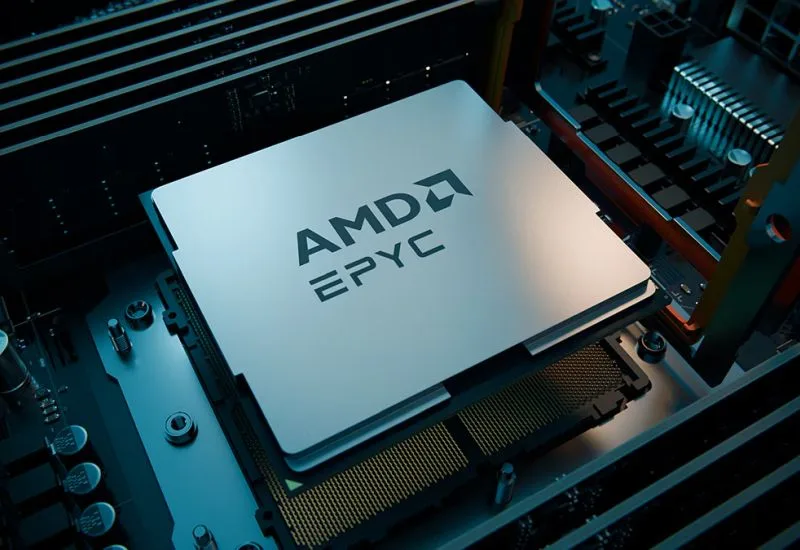
With Nvidia making a significant move into the server CPU arena, AMD is positioning itself strongly against its new competitor. Recent claims from AMD suggest that its upcoming Epyc processors based on the Zen 6 architecture will offer a notable advantage in performance compared to Nvidia’s Vera server CPUs when assessed on a per-rack basis.
As Nvidia broadens its footprint beyond graphics and AI accelerators into general-purpose server processors, AMD is emphasizing the strengths of its next-generation Epyc lineup. According to AMD, the Zen 6 Epyc processors could deliver more than triple the computational performance relative to Vera CPUs from Nvidia in the same rack space. This significant lead reportedly translates to about 230% greater efficiency in terms of raw computational output per unit rack.
This comparison underscores the intense competition emerging in the server processor market, where factors such as power density, compute throughput, and infrastructure costs are paramount for data center operators. AMD’s statement reflects a strategic attempt to highlight superior density and performance scaling advantages of its forthcoming architecture within enterprise and cloud environments.
The arrival of Nvidia in the server CPU market introduces fresh dynamics to a space traditionally dominated by AMD and Intel. Server racks often contain numerous processors, and improving the performance per rack can lead to reductions in physical space needed and associated operational expenses. AMD’s Zen 6 cores are built with architectural improvements aiming to boost overall throughput while maintaining energy efficiency, which may contribute to the performance gains referenced in their announcement.
While detailed benchmarks, pricing, availability, and exact technical specifications of the Zen 6 generation Epyc CPUs and Nvidia Vera processors were not disclosed, this comparative statement sets a competitive tone for the evolving server processor landscape. Both companies are expected to continue investing heavily in innovation targeting high-performance computing workloads across enterprise, cloud, and emerging AI-focused applications.
Industry watchers will be closely monitoring how these processor lines execute on their promises, especially as data center operators look for solutions that maximize compute density and flexibility. AMD’s focus on outperforming Nvidia per rack indicates attention to total infrastructure efficiency, a critical factor in next-generation data center design.
Ultimately, the rivalry between AMD’s established Epyc line and Nvidia’s new Vera processors marks a significant development for server CPUs, potentially benefiting end users through increased performance options and competitive technological advancements.
AMD reports its Zen 6-based Epyc processors outperform Nvidia’s Vera CPUs by up to 3.3 times in rack-level server performance.