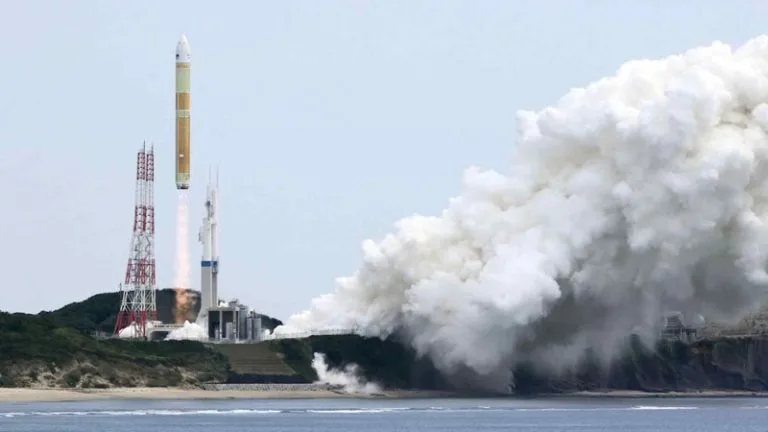
Japan Successfully Launches H3 Rocket in Lightest Configuration
June 12, 2026
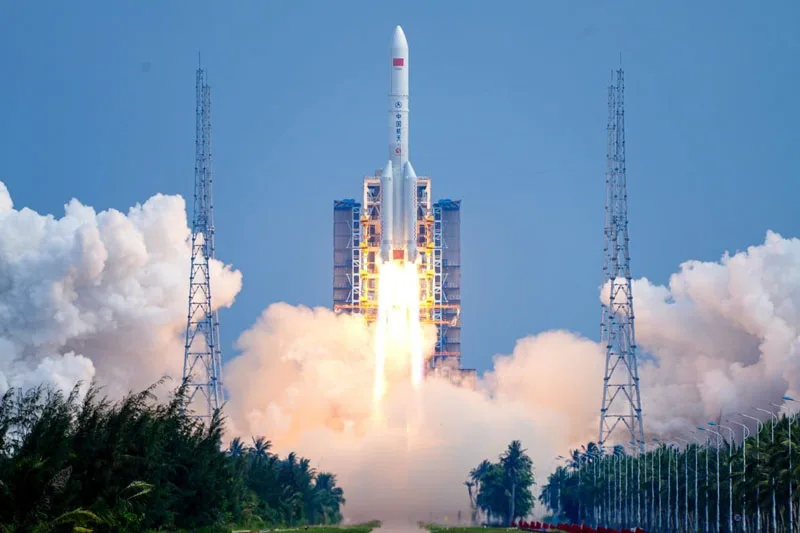
China recently conducted a significant launch using one of its heaviest launch vehicles, the Long March 5 rocket. The mission, which took place on June 11, 2026, marked the 11th time this heavy-lift rocket has been deployed and its first launch for the year.
The takeoff occurred at 3:30 p.m. Beijing Time (10:30 a.m. Moscow Time) from the Wenchang Space Launch Center situated on Hainan Island. This facility is known for handling some of the nation’s most substantial space missions.
Unlike previous Long March 5 flights primarily tasked with delivering lunar landers and rovers, this launch carried a communications satellite intended for Earth orbit. Reports indicate the payload’s mass, including its carrier structure, was unusually large—enough to surprise aerospace analysts and spark discussions about its technical capabilities and mission objectives.
Details about the satellite’s specific specifications, purpose beyond general communications, or its operator have not been publicly revealed. This lack of information has contributed to the intrigue surrounding the launch.
China’s use of the Long March 5 rocket, a platform frequently reserved for heavy or high-priority payloads, reflects its ongoing commitment to expanding its space infrastructure and technology. The vehicle’s ability to support large mass payloads has previously enabled China’s lunar exploration efforts, including the deployment of rovers and landers that have significantly advanced the country’s presence in lunar research.
The latest launch continues this trend but signals a possible broadening of mission scope, emphasizing satellite communications technologies. As global reliance on satellite networks grows, the deployment of heavier and more capable spacecraft is becoming increasingly important for commercial, scientific, and strategic applications.
The successful launch from Wenchang, which is located near the equator for advantageous orbital insertion, also highlights China’s emphasis on developing state-of-the-art launch sites optimized for a variety of mission profiles, including those requiring significant payload masses. This complements its agenda of enhancing space logistics and infrastructure capabilities.
While expert communities analyze the unusually heavy satellite, further technical disclosures or subsequent missions might provide additional insight into the satellite’s design and functional aims. Until more data becomes available, the launch remains a testament to China’s growing prowess in wielding heavy-lift rockets for diverse and challenging orbital deliveries.
China’s Long March 5 rocket launched a heavy communications satellite with a payload mass that has puzzled experts.