Memory Chip Makers Face Potential DRAM Oversupply by 2028 Amid Massive Capacity Expansions
July 20, 2026
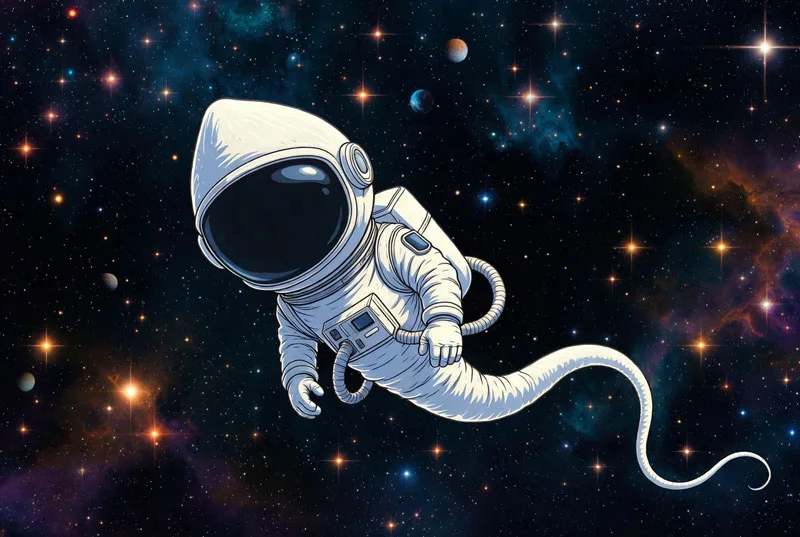
Research conducted by the University of Adelaide has uncovered a significant biological hurdle for long-term human habitation beyond Earth. Published recently in the journal Communications Biology, the study demonstrates that microgravity conditions severely impair the ability of sperm cells to navigate, a critical factor in successful fertilization.
In terrestrial environments, sperm rely on chemical and physical cues to reach and fertilize an egg. The study’s findings indicate that in microgravity, these navigation mechanisms are disrupted, causing sperm to lose their directional sense. This impairment poses a substantial challenge to reproduction in environments such as space stations, lunar bases, or Martian colonies where gravity is markedly lower than on Earth.
These results suggest that current plans for establishing human settlements on the Moon and Mars must take into account the biological barriers associated with reproduction under altered gravity conditions. If unaddressed, such challenges could limit the ability of future space colonists to reproduce naturally, impeding the long-term sustainability of off-world communities.
The research emphasizes that navigation difficulties under microgravity are not merely a minor inconvenience but represent a fundamental obstacle that could compromise conception rates outside Earth’s gravity. Understanding and overcoming this issue will be critical as humanity moves toward extended space habitation and multi-generational colonization efforts.
While the study focused on sperm attributed to human biology, these findings may also have broader implications for other species considered for space research or ecological support systems in extraterrestrial habitats. It highlights the complex interplay between biology and environment and underscores the need for further investigations into reproductive health in space.
Efforts to counteract the effects of microgravity on sperm navigation could involve means such as artificial gravity environments, pharmaceutical agents, or bioengineering approaches. However, according to the report, these strategies require significant development and validation before they can be reliably implemented in human space missions.
The University of Adelaide’s contribution marks an important step in recognizing and addressing key scientific challenges that space colonization must overcome. The study cautions planners and engineers involved in long-term space habitation projects to incorporate such biological factors into mission designs.
As space agencies and private enterprises continue to pursue lunar and Martian bases, integrating comprehensive reproductive health research will be essential. This ensures that human settlements beyond Earth do not face unforeseen limitations in population growth and genetic viability.
In conclusion, while the dream of establishing permanent off-world colonies remains a driving goal of modern space exploration, new biological findings such as these serve as reminders of the complex realities involved. Microgravity’s effect on sperm navigation highlights a crucial barrier that must be addressed to make sustainable human life beyond Earth a reality.
A study reveals microgravity disrupts sperm navigation, posing fertility challenges for human reproduction in space colonies.